Computer Engineering · Robotics · Optimization

Aleksandr Gordeev

Computer engineering student building autonomous systems, from embedded firmware and custom PCBs to multi-objective trajectory optimization. Based in Izmir, Türkiye.

Open to part-time work & internships

See my projects GitHub LinkedIn Download CV

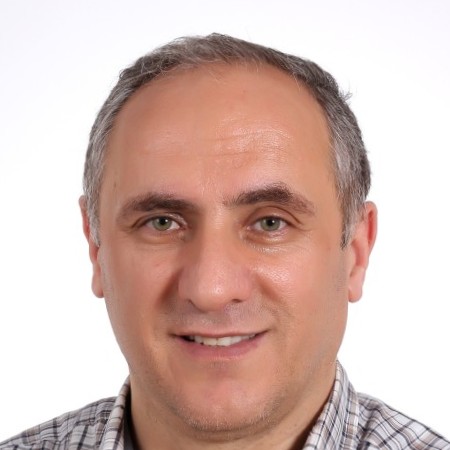
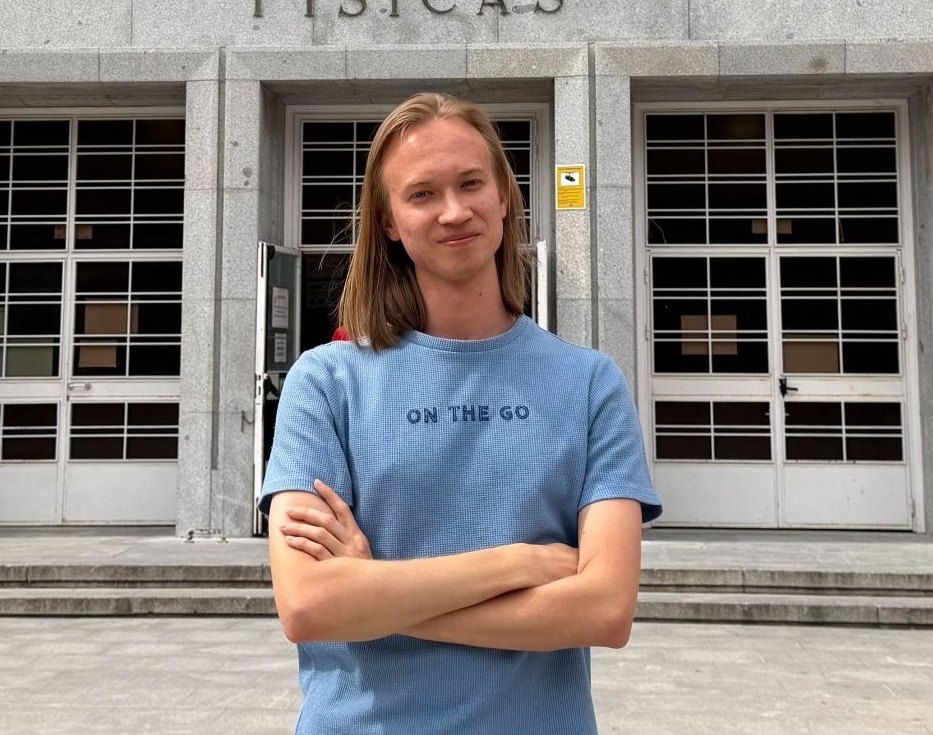
Portrait of Aleksandr Gordeev

About

International finalist at the World Robot Olympiad 2021 with an autonomous tram system, now a Computer Engineering student at Yaşar University, with an Erasmus+ year at Universidad Complutense de Madrid.

In 2026 I worked on multi-vehicle trajectory planning at the ISCAR Research Group in Madrid, extending a MATLAB planner using NSGA-II/III optimization for fleets of autonomous surface vehicles.

Today I’m developing an autonomous tram digital twin, a C++/WebAssembly simulator for automated multi-tram operations, safety testing and energy efficiency. On the side, I’m building Privet: an iOS Russian course with ESP32 robot companions that react to your answers.

Projects

Privet: Learning App + BLE Robot Companion

Oct 2026 – ongoing

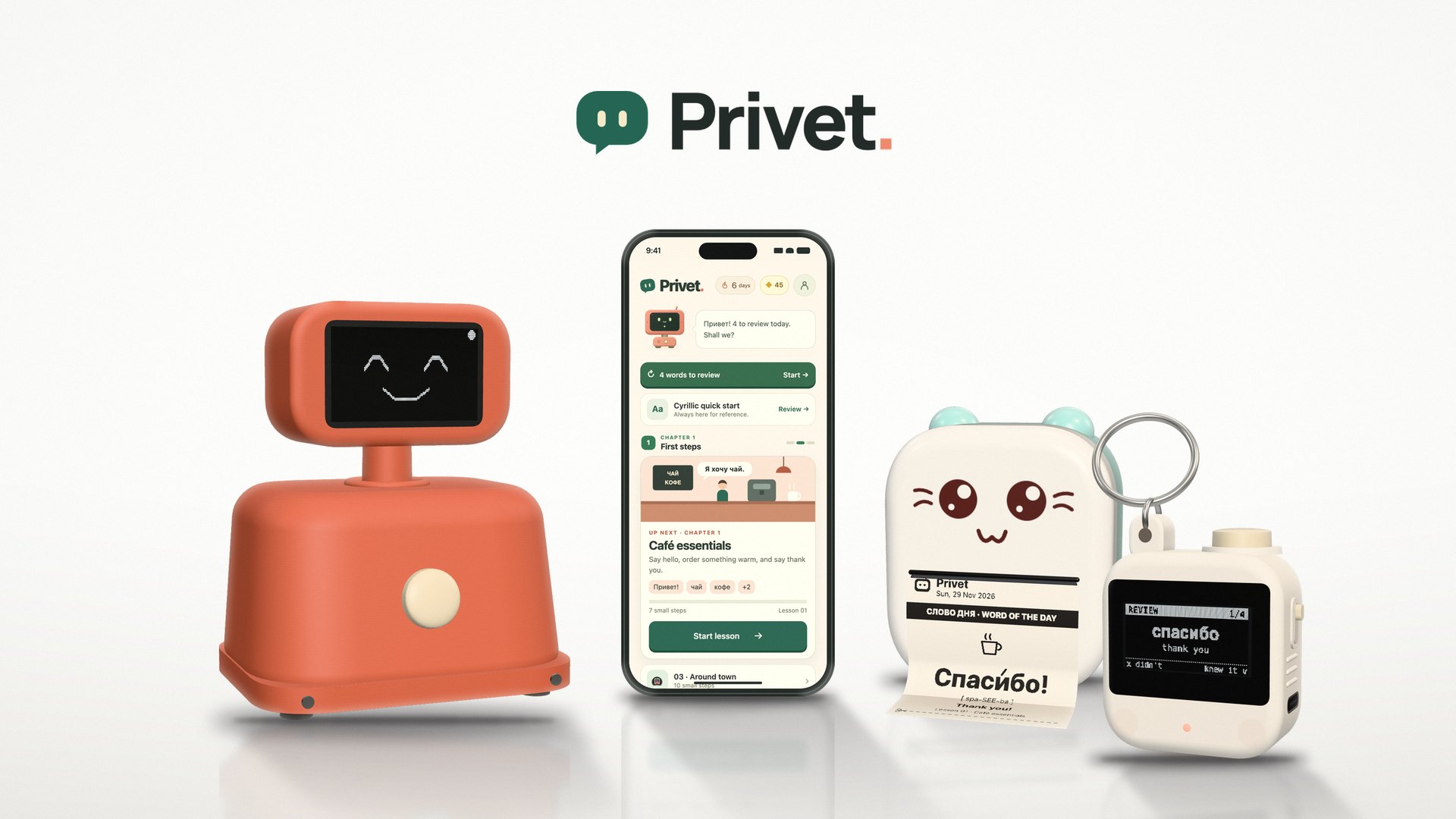
A native iOS Russian course that drives ESP32 desk and keychain companions over Bluetooth LE. The phone runs the lessons; the robot reacts with OLED faces, head motion and sound, and the link survives the phone being locked.

  • TypeScript
  • React
  • iOS
  • C++
  • ESP32
  • BLE

Autonomous Tram Digital Twin

Aug 2026 – ongoing

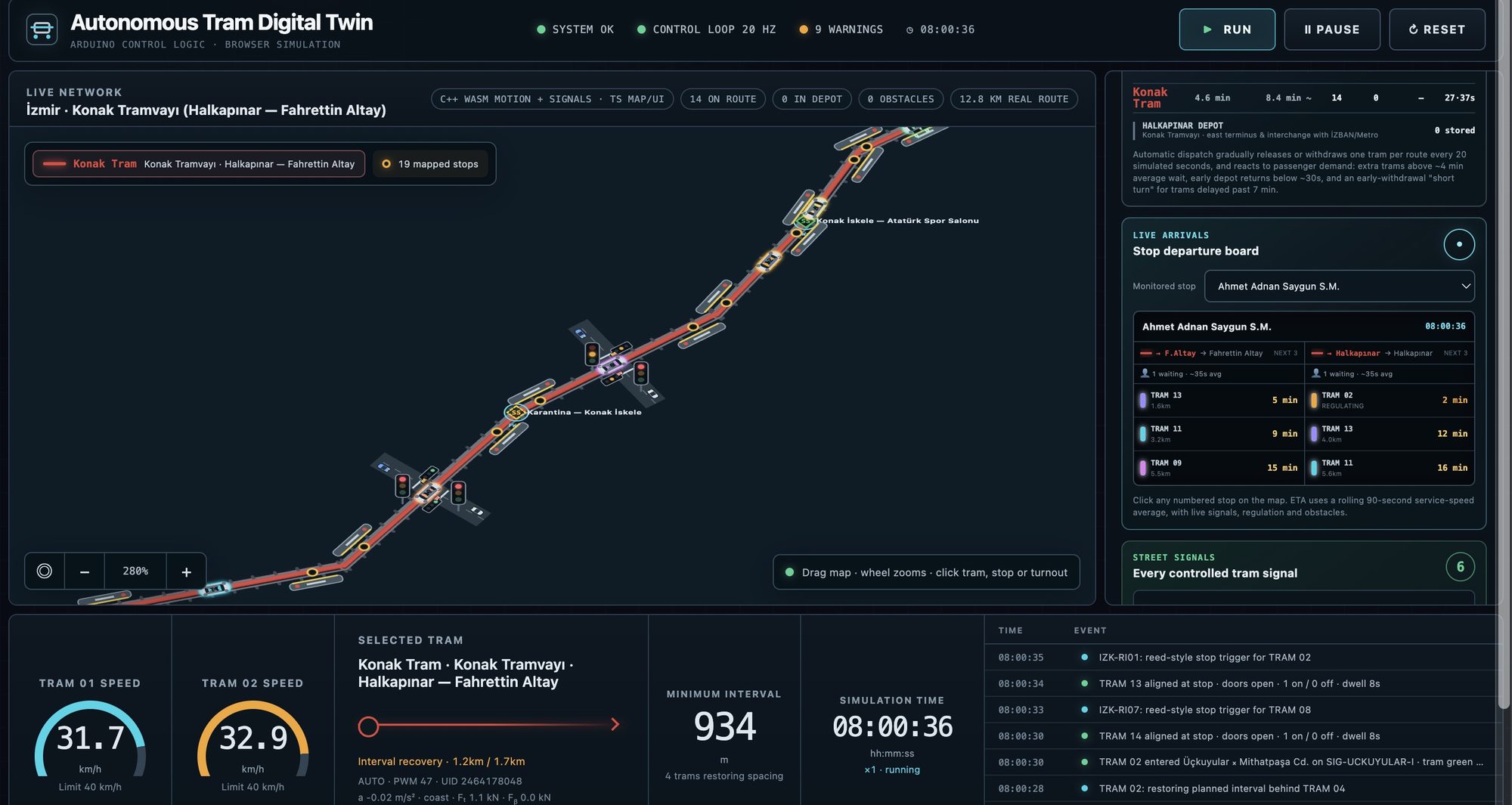
A C++/WebAssembly simulator of automated tram networks: zero safety violations under ~9,900 injected faults, and 22–24% less grid energy with wayside flywheel storage.

  • C++
  • TypeScript
  • WebAssembly
  • Simulation
  • Safety testing

Multi-ASV Trajectory Planning

Jun – Jul 2026 · ISCAR Research Group

Multi-objective mission planning for fleets of autonomous surface vehicles monitoring cyanobacterial blooms.

  • MATLAB
  • NSGA-II / III
  • Optimization

Red Monopoly

Jan – May 2025

A Java desktop board game with multiplayer for up to eight players, adaptive AI and a separate game logic layer.

  • Java
  • OOP
  • Networking
  • GUI
  • Scrum

Autonomous Tram System

2020 – 2022

Autonomous model tram with custom electronics, real-time control and vehicle-to-infrastructure communication.

  • C++
  • Arduino
  • PCB Design

Skills

Programming

  • C/C++
  • MATLAB
  • Java
  • Python
  • SQL

Low-level

  • MIPS Assembly
  • RISC-V Assembly

Engineering

  • Arduino
  • ESP32
  • Embedded systems
  • PCB design
  • Electronics
  • Digital design

CS concepts

  • OOP
  • Data structures
  • Algorithms
  • Computer networks
  • Scrum

Tools

  • Git
  • GitHub
  • LaTeX
  • Xcode
  • 3D printing

Languages

  • Russian · Native
  • English · C1
  • Turkish · B1
  • Spanish · A2

Education

2023 – expected 2027

B.S. in Computer Engineering

Yaşar University, İzmir, Türkiye · 100% scholarship

2024 – 2025

Erasmus+ Exchange

Universidad Complutense de Madrid, Spain · Grant recipient

Experience

Jun – Jul 2026

Robotics & Autonomous Systems Intern

ISCAR Research Group, Universidad Complutense de Madrid

  • Worked on trajectory planning for multiple autonomous surface vehicles (ASVs).
  • Applied multi-objective evolutionary optimization (NSGA-II / NSGA-III).
2018 – 2022

Assistant Robotics Instructor and Competition Judge

Palace of Children's Creativity, Nizhny Novgorod, Russia

  • Guided junior students in robotics projects and evaluated mechanics and algorithms at youth competitions.
2018 – 2020

Robotics Mentor and Event Coordinator

Regional Charity Organisation "Zabota", Nizhny Novgorod, Russia

  • Taught LEGO EV3 and Arduino fundamentals to underprivileged youth and helped organize robotics events.

Recommendations

LinkedIn recommendation

Aleksandr was a motivated and engaged student who showed a genuine interest in learning and developing his knowledge of computer engineering. He approached his studies with a positive attitude and demonstrated curiosity and enthusiasm throughout the course.

Prof. Juan Antonio Maestro

Universidad Complutense de Madrid

Fundamentals of Computers I & II lecturer · 2024–2025

Prof. Juan Antonio Maestro

LinkedIn recommendation

Aleksandr demonstrated exceptional understanding, earning an A in both courses and achieving a perfect score (100/100) on the Calculus II midterm, a distinction earned by only two students across the university.

Prof. Dr. Şahlar Meherrem

Yaşar University

Calculus I & II lecturer · 2023–2024

Prof. Dr. Şahlar Meherrem

Selected Achievements

Certificates & Courses

Course and certificate details will be added here soon.

Contact

Email: algordeev18@gmail.com
GitHub: github.com/algordeev
LinkedIn: linkedin.com/in/algordeev

Download CV

Recommendation

Prof. Dr. Şahlar Meherrem

Yaşar University

Calculus I & II lecturer · 2023–2024

Published:

I had the pleasure of teaching Aleksandr Gordeev during the 2023–2024 academic year in both Calculus I and Calculus II at Yaşar University. Aleksandr demonstrated exceptional understanding, earning an A in both courses and achieving a perfect score (100/100) on the Calculus II midterm, a distinction earned by only two students across the university.

What stood out most was Aleksandr's genuine intellectual curiosity and his dedication to mastering the subject beyond what was required. He often stayed after class to discuss advanced concepts, posed insightful questions, and actively engaged in classroom discussions. His clarity in thought and communication, along with his support for peers, contributed greatly to the learning environment.

Aleksandr combines strong analytical thinking with a deep motivation to learn, making him well-suited for both academic and professional research settings. I am confident that he will be a valuable asset to any team or organisation he joins.
Prof. Dr Shahlar Meherrem, Yasar University, Departments of Mathematics, Türkiye

Recommendation

Prof. Juan Antonio Maestro

Universidad Complutense de Madrid

Fundamentals of Computers I & II lecturer · 2024–2025

Published:

I had the pleasure of teaching Aleksandr in Fundamentals of Computers I and II at Complutense University of Madrid (UCM) during the 2024–2025 academic year, as part of the Erasmus exchange programme. Aleksandr was a motivated and engaged student who showed a genuine interest in learning and developing his knowledge of computer engineering. He approached his studies with a positive attitude and demonstrated curiosity and enthusiasm throughout the course. I am confident that his dedication, international experience, and willingness to learn will serve him well in future academic and professional endeavours. I would gladly recommend Aleksandr for further academic opportunities.

Project details

Autonomous Tram System

Context
Individual robotics project · WRO 2021
My focus
Embedded control, custom PCBs & system integration
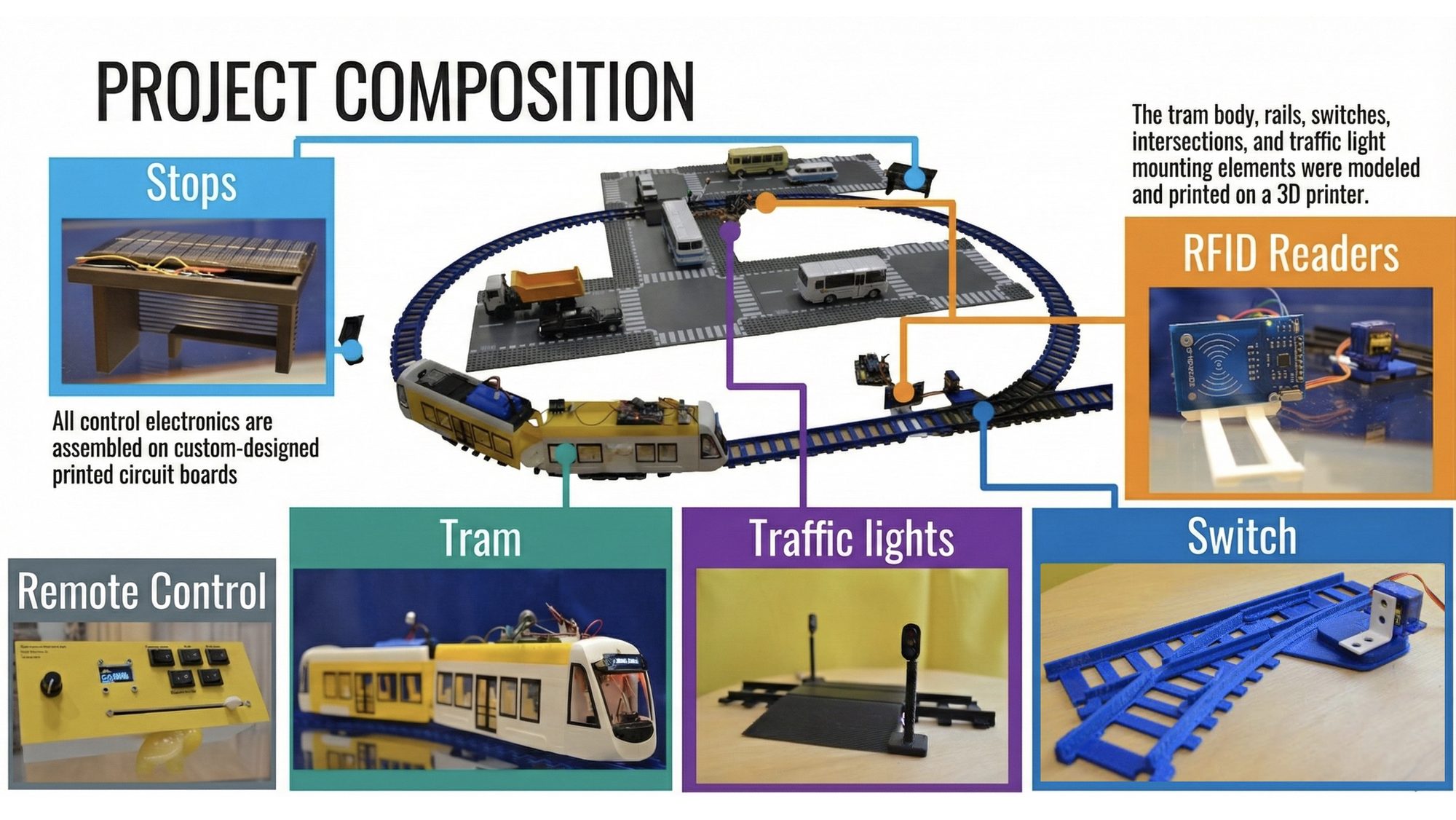
4Arduino Nano controllers: tram, remote, switch and signals
3Custom PCBs: tram, remote and traffic lights
2 + 22 NRF24L01 wireless modules and 2 RFID readers
AI-generated visualization inspired by the physical prototype. Watch the real prototype demo ↗

The challenge

Build a physical model tram that can control its movement, detect obstacles and communicate with infrastructure through an integrated embedded system.

My work

I developed the model’s embedded control system, combining Arduino Nano hardware, C++ firmware and custom PCBs. The firmware handles motion control, obstacle detection, manual override and RFID-based infrastructure interaction; the electronics integrate motor drivers, wireless modules, distance sensors and actuators.

Four controllers, two ways to coordinate

The remote and tram share an NRF24L01 radio link. The switch and signals work independently, reading RFID tags on passing vehicles. A reed switch triggers the tram’s programmed station stop.

Remote

Joystick and buttons → NRF24L01 speed, direction, mode and stop commands.

Tram

VL53L0X and reed switch → Arduino Nano → TB6612FNG driver and geared motor.

Track switch

RFID tag → MFRC522 reader → Nano → servo position for the configured route.

Traffic lights

RFID tag → MFRC522 reader → Nano → programmed signal-change sequence.

How the model handles a stop

  1. Obstacle detected

    In autonomous mode, a distance reading of 70 mm or less disables both motor-direction outputs.

  2. Station reached

    The reed switch starts a slow 2-second approach, followed by a 5-second stop.

  3. Manual control

    The remote selects speed, direction and mode; its stop command disables the motor outputs.

Energy-efficiency concepts

The project report explores regenerative braking with flywheel storage, solar-powered stops and piezoelectric paving for auxiliary power. These are proposed directions supported by calculations and demonstrations, rather than measured energy savings from the model tram.

Outcome

A working autonomous tram model that won the WRO 2021 Russian National Final and competed at the international final. The physical prototype later became the starting point for my autonomous tram digital twin.

Technology

C++ · Arduino Nano · PCB design

Key features

Motion control · Obstacle detection · Manual override · RFID infrastructure

Mechanical base: tram body, rails and track-switch designs by Depronized; modified for this prototype, with custom infrastructure and electronic integration.

Project details

Red Monopoly

Context
Software engineering team project · UCM
My role
Product Owner & Java developer
2–8Players in the documented LAN multiplayer mode
3AI difficulty levels with different purchase rules
6Scrum sprints documented in the project wiki
AI-generated intro, not gameplay.

The challenge

Build a Soviet-themed Monopoly-style desktop game in Java as a Scrum team project, combining board-game rules, a graphical interface, AI opponents and IP-based multiplayer for up to eight players.

My work

As Product Owner and Java developer, I managed the team backlog and implemented property and railroad purchases, rent payments, taxes and card events. I integrated difficulty-dependent AI purchasing decisions, added gameplay dialogs and player icons, and co-developed undo using the Command pattern. I also fixed gameplay and multiplayer messaging issues, maintained the wiki and presented features during sprint reviews.

Three ways to decide a purchase

The AI uses explicit purchasing rules. Each difficulty changes how an opponent decides whether to buy a property or railroad.

Easy

Buys when its cash covers the price.

Medium

Requires cash of at least 120% of the price to keep a buffer.

Hard

Requires cash above the price and a rent-to-price ratio greater than 5%.

Keeping the game state consistent

The Swing interface, controller and game model separate presentation from rules. JSON save/load preserves game state; a command history supports undo. In multiplayer, a TCP host coordinates client messages and turn handling.

  1. Swing interfaceBoard, dialogs and player information
  2. ControllerActions, undo history and save/load
  3. Game modelPlayers, tiles and AI strategies

From board rules to multiplayer

  1. Sprints 1–3 · Core gameplay

    Dice, purchases and rent, followed by a visual board, player movement and tile events.

  2. Sprints 4–5 · State and opponents

    JSON save/load, Command-based undo, three AI strategies and a redesigned themed board.

  3. Sprint 6 · Playing together

    Deeper undo, pre-game figure selection, tax dialogs and an alpha host/join multiplayer mode.

Outcome

A playable Java desktop game with a themed board, AI opponents with three difficulty levels, save/load, undo and a networked multiplayer mode. The team delivered the game through six Scrum sprints, with source code and development documentation available on GitHub.

Technology

Java · OOP · Networking · GUI · Scrum

Key features

IP-based multiplayer · Adaptive AI · Game state management · Logic / GUI separation

Project details

Multi-ASV Trajectory Planning

Supervisors
José Antonio López Orozco · Eva Besada Portas
My focus
Planner extension, experiments and analysis
1 → NAutonomous Surface Vehicles (ASVs)
NSGA-II → IIIOptimisation algorithm upgrade
+44.4%Best density-score improvement

Objective comparison: longest route versus sum of routes, NSGA-II, 100 iterations. Five repeats per case; results are exploratory.

The challenge

Plan coordinated missions for several autonomous surface vehicles monitoring cyanobacterial blooms. Routes must balance collision avoidance, route overlap and workload across the fleet.

Simulation details

Lake Mendota

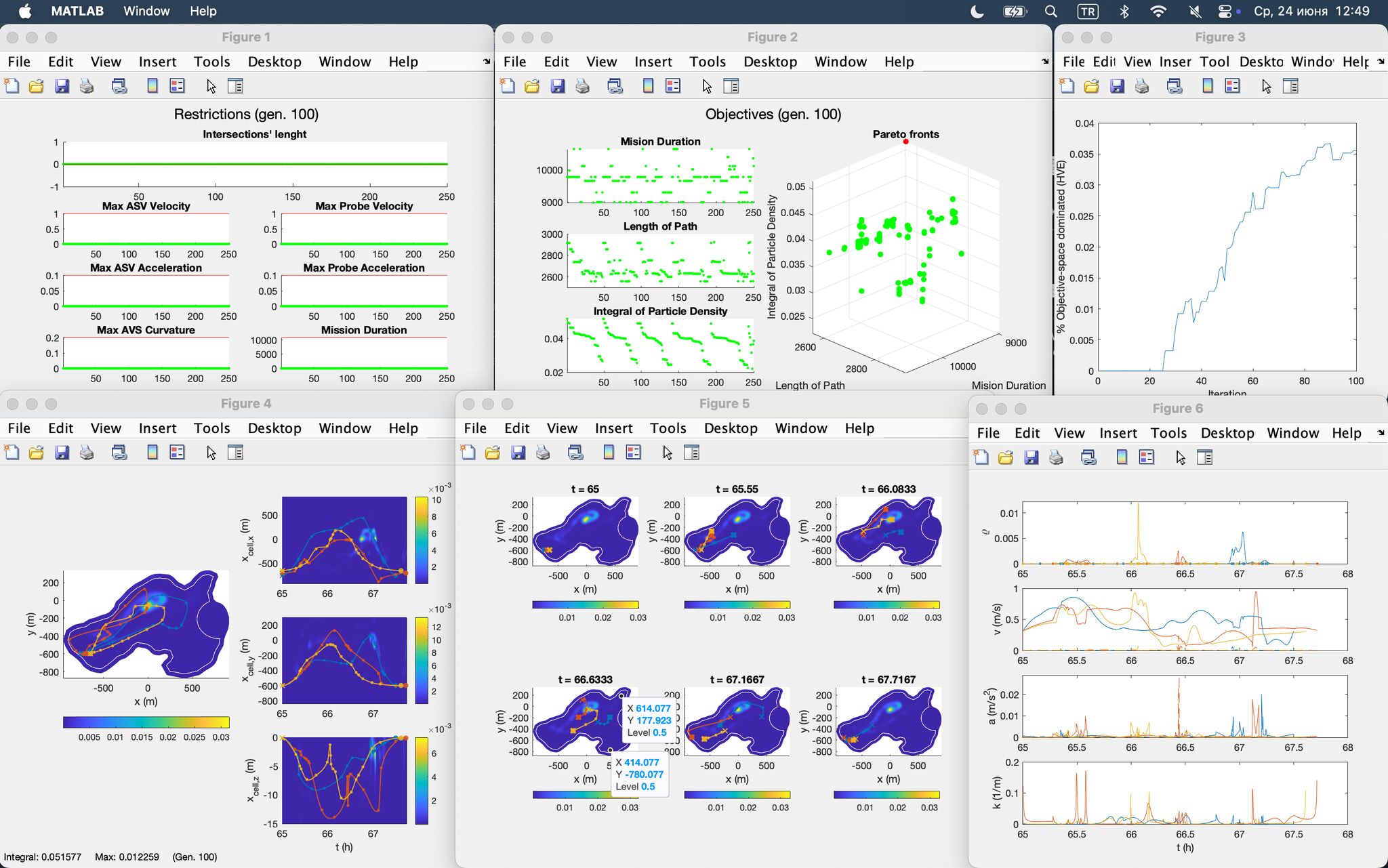
E2 · A2R3X2 · Two ASVs. Repeat 1, generation 200, solution 6 (MATLAB 1-based index). Mission duration: approximately 62.3456 minutes; recorded simulation hours 54.0–55.0391. A balanced solution from the final Pareto front, selected by minimising distance to the ideal point after equally min-max normalising the three objectives.

Lake Campillo

E4 · A2R3X2 · Two ASVs. Repeat 4, generation 200, solution 11 (MATLAB 1-based index). Mission duration: approximately 90.7035 minutes; recorded simulation hours 47.0–48.5117. A balanced solution from the final Pareto front, selected by minimising distance to the ideal point after equally min-max normalising the three objectives.

Both runs use the median-hypervolume repeat among five repeats. The maps show recorded cyanobacteria motion and planned trajectories; synchronised charts show local projected density (model units), horizontal speed over ground (m/s) and probe depth (m). Density is a model projection, not calibrated concentration.

My work

During my ISCAR internship at Universidad Complutense de Madrid, I extended an existing single-vehicle MATLAB planner to multi-vehicle scenarios. I worked with NSGA-II and NSGA-III, ran repeated simulations for two- and three-vehicle fleets, and analysed Pareto fronts using hypervolume evaluation and non-parametric statistical comparisons.

A more realistic distance objective

Summing every route treats the fleet as if it shared one battery. Minimising the longest individual route matches reality: each vehicle carries its own battery.

Fleet idle time during the mission (minutes, lower is better)

Two vehicles

Sum of routes61.1
Longest route23.4

Three vehicles

Sum of routes56.4
Longest route19.3

Best density score: +44.4% with two vehicles, +16.6% with three. Idle time: −61.7% and −65.8%. (NSGA-II tests, 100 iterations.)

Two or three vehicles?

Fleets were compared with one common hypervolume reference, at equal generations, at equal wall-clock time and at their configured end points.

−11.3%Three vs two vehicles at equal generations (200)
−12.8%Three vs two vehicles at equal wall-clock time
+17.8%Three vs two at configured end points (500 vs 200 generations, so not a fair comparison)

Pooled common-reference hypervolume. With five repeats per case, the results are exploratory.

Outcome

Multi-vehicle planning experiments with trajectory plots, comparative figures and an internship report. The work provided a basis for assessing trade-offs between competing mission objectives and comparing optimisation methods across repeated simulation runs.

Technology

MATLAB · NSGA-II / III · Optimization

Key features

Collision avoidance · Route overlap · Workload balancing · Statistical comparison of Pareto fronts

The project is funded by Comunidad de Madrid and co-funded by the European Union through the European Regional Development Fund (ERDF).
Project details

Autonomous Tram Digital Twin

Context
Independent research prototype
My focus
Automated operations, safety testing & traction energy
Status
Live web demo · ongoing research
0Safety violations across ~9,900 injected detector and switch faults (172 simulated hours)
22–24%Less grid energy per vehicle-km with wayside flywheels, on all three networks
≈1 hFor the line to return to its timetable after a tram is held for up to 10 minutes

This project grew out of my physical autonomous tram, the WRO 2021 Russian national winner. I extended it into a network-scale digital twin: automated multi-tram control that has to stay safe when detectors fail, recover from delays on its own and give reproducible results.

Architecture

  1. C++ / WebAssemblyMotion, braking, doors, signals, turnouts and energy decisions
  2. TypeScript orchestrationNetwork data, passenger demand, service plans and experiments
  3. React + CanvasInteractive map, operator controls and live analysis panels

A fixed 50 ms step drives the C++ core. The interface only shows snapshots and sends commands, so the same engine also runs headless for batch experiments and in native C++ tests.

Models & testing

Vehicle model
Passenger-dependent mass, force and power limits, jerk-limited traction and braking, gradients and curve speed limits.
Networks
Nizhny Novgorod Route 2 ring and shared-track Routes 2 + 21; Izmir Konak line with 19 stops and a depot.
Operations model
Passenger demand and dwell, signals, turnout locks, terminal slots, depot dispatch and headway regulation.
Safety oracle
Independent check on every step from true positions and track geometry: collisions, 22 m spacing, overtaking, crossings, locked points.
Fault injection
Seeded detector and switch faults about once a minute in 4-hour sessions, 45 sessions on two networks.
Energy benchmark
No storage, reactive and predictive flywheels on the same fleet, timetable and window; grid Wh per vehicle-km and peak power.

Stress test: injected faults vs. safety oracle

Injected faults

0 safety violations

45 sessions ·~9,900 faults · 172 simulated hours · closest bodies 6.6 m apart · no operator needed

Three failures the stress test found, and how I fixed them

  1. Stale crossing grant

    A lost detection left a road crossing reserved for a tram that had already passed.

    Fix The tram’s odometer now re-reports its own entry and rear clearance.

  2. Phantom switch lock

    A spurious reader report locked the points for a tram that never came and deadlocked the Nizhny Novgorod network.

    Fix An approach lock lapses after 60 s unless its tram is committed to the points.

  3. Stuck in the crossing

    A tram queueing for a full terminal stopped inside the Üçkuyular road crossing and held it at all-red.

    Fix A tram enters a crossing only if it can clear it, and the grant goes to the first tram in line.

Delay recovery: regulation on vs. off

Mean deviation from the planned 4.6-min headway, s (10-min rolling)

050100150200250020406080100holdback in band · 57 min

Minutes after the hold starts

  • Regulation on, 5-min hold
  • Regulation off, 5-min hold
  • Regulation off, no hold
Izmir Konak, 14 trams, evening peak; one tram held 5 min at Konak İskele. Holds of 2, 5 and 10 min recover in 48, 57 and 60 min; without regulation, 5- and 10-min holds never recover within 105 min.

Energy: wayside flywheels vs. no storage

Reduction against no storage, reactive flywheels (%)

Izmir Konak · 14 trams

Grid energy22.0
15-min peak22.6

Nizhny Novgorod Route 2 · 10 trams

Grid energy23.9
15-min peak24.5

Nizhny Novgorod Routes 2 + 21 · 10 trams

Grid energy23.1
15-min peak24.2

15 min is a common billed-demand interval. Izmir saving across time of day and fleet size: 21.2–⁠25.1%.

No wayside storage

Baseline: braking energy is reused only by other trams.

Reactive flywheels

Store surplus braking energy; discharge above a section’s grid setpoint.

Predictive control

Adds traction limiting. Finding: it rarely triggers, so it matches reactive.

What’s next

  1. Calibration

    Fit the vehicle and energy model to measured Izmir data; report uncertainty ranges.

  2. Multi-objective optimisation

    NSGA-II/III over speed profiles, regulation and flywheel dispatch, with zero safety violations as a hard constraint.

  3. Hardware in the loop

    Raspberry Pi edge computer with ESP32 tram and wayside controllers; control loop under 50 ms in 99% of steps.

  4. Electrical network model

    DC load flow with cable and rail resistance, and its voltage limits on regeneration.

Simulator results: not certified signalling, and energy figures are comparative until calibrated against measured data.

Technology

C++ · TypeScript · WebAssembly · React · Canvas

Key features

Fault injection & safety checker · Headway regulation · Passenger simulation · Signals, crossings and switches · Energy benchmark

Live demo → Source code → Results & data → Models & experiment documentation →

Project details

Privet: Learning App + BLE Robot Companion

A Russian course on iPhone with a family of Bluetooth companions that react as you learn.

Context
Solo product prototype
My focus
iOS app, BLE protocol, ESP32 firmware & electronics
Status
Working on a real iPhone
3Bluetooth companions
11Robot reactions
6Exercise types

Meet the family

Concept renders of the enclosures; the electronics inside are working prototypes.

See it in motion

One-minute promo I made: real app footage with the app’s 3D companions.

Inside the app

How it works

  1. iPhone appLessons, answer checking and progress
  2. BLE protocolEmotion commands and learning cards, each acknowledged
  3. ESP32 firmwareFaces, gestures, sound and sensors

My work

Technology

TypeScript · React · Capacitor · Swift · C++ · ESP32 · Core Bluetooth

Key features

Cyrillic guide · Spaced review · BLE companions · Thermal printing · Works offline

Live site → Source code →